If you have ever gathered quotes for new windows in Tucson, you know how confusing the numbers can be. One company hands you a total on the back of a brochure, another sends a multi-page estimate for thousands more, and both claim to offer the best window for the desert.
When two quotes for the same home sit that far apart, it is tempting to assume the higher quote is overpriced or the lower quote is a bargain. The cheaper quote is not automatically the better value, and the highest quote is not always the best fit. The difference almost always comes down to four specific details that move the price of a window project.
1. The Glass Package and Low-E Coating
In the Sonoran desert, clear glass is an open door for heat. When afternoon sun hammers your west-facing and south-facing glass, the glass package determines how much of that solar energy enters your living room. A basic double-pane window with an entry-level Low-E coating costs less to manufacture than a high-performance glass package engineered with multiple layers of metallic Low-E coating and dense insulating gas between the panes. When comparing quotes, look at the solar heat gain rating, which measures how well the glass blocks desert heat before it crosses into your room.
2. The Frame Material
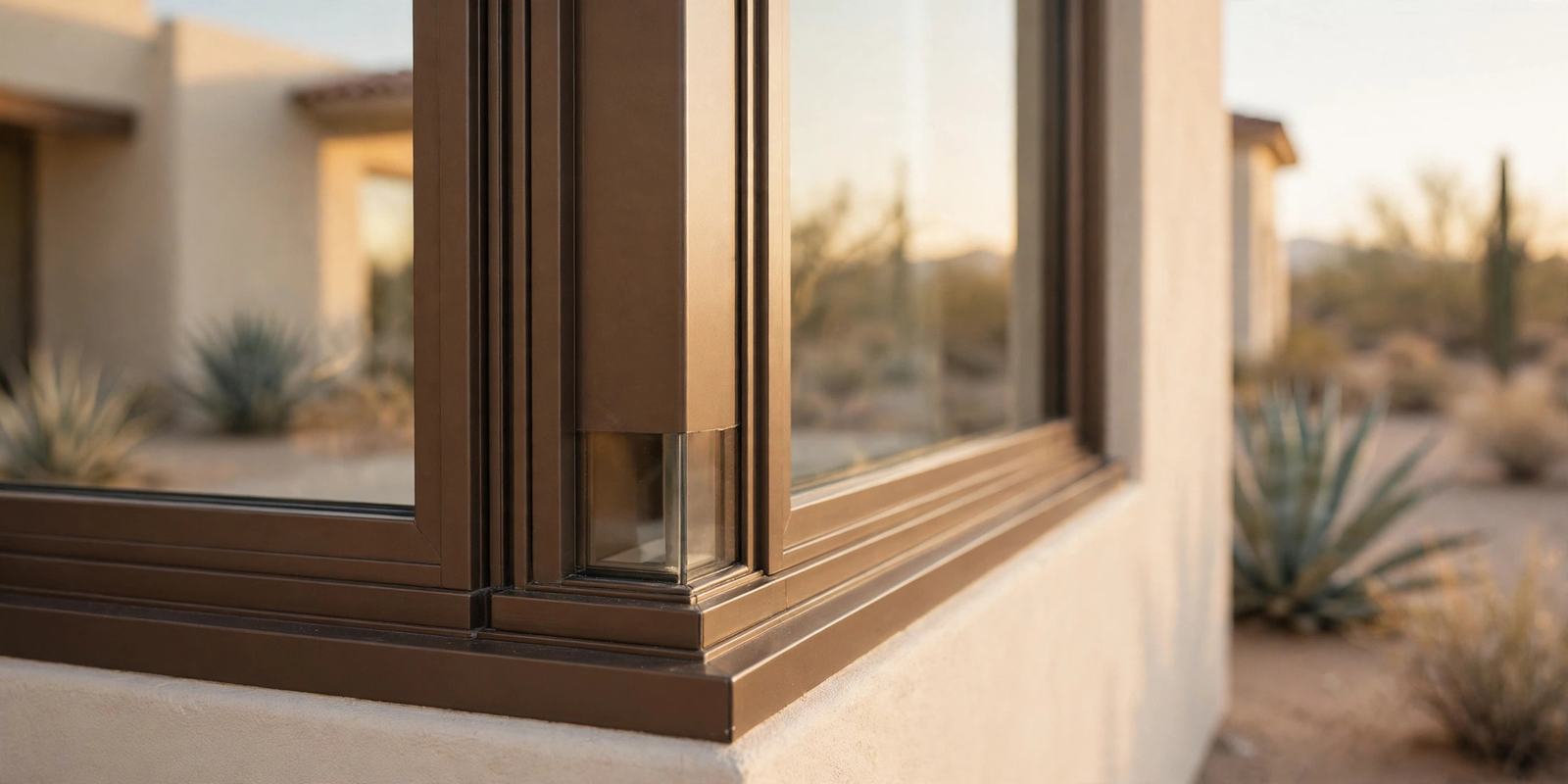
The glass is only part of the window. The frame holds the glass in place and sits directly against your hot stucco walls all summer. Entry-level hollow vinyl frames can soften or warp over time in Tucson heat, while multi-chamber vinyl, composite, or fiberglass frames are built with internal structure that resists heat transfer and keeps the seals tight year after year.
Aluminum frames deserve a mention of their own, because so many older Tucson homes still have them. Aluminum conducts heat like a frying pan, so on a summer afternoon the frame itself becomes one of the hottest parts of the wall, and it passes that heat straight into the room. Newer aluminum frames with a thermal break do better, but most original ones were built without it.
3. The Installation Method
How a window is put into the wall changes both the labor cost and the long-term result. An insert installation slides a new window into the existing frame, which is faster and less expensive but can leave old perimeter seals untouched. A full-frame replacement removes the old window down to the framing, seals the opening properly, and addresses any stucco or trim wear around the perimeter.
4. Whole-Home Scope vs. Piecemeal Swaps
The number of windows being replaced changes the total, but it also changes how the house performs. Original builder-grade windows were installed at the same time and have baked in the exact same weather, so they age as one system. Replacing one window in a bedroom rarely fixes a comfort problem that lives in all of the aging windows across the house.
Questions That Reveal Whether a Quote Is Fair
Instead of looking at the bottom number first, lay your quotes side by side and ask four simple questions for each line item:
- What exact glass package, Low-E coating, and solar heat gain rating are included?
- How is the frame constructed, and how does it handle extreme desert heat?
- What installation method is being used, and how is the stucco perimeter sealed?
- What does the quote leave out, such as haul-away, screens, stucco touch-ups, or permit fees?
When you compare quotes apples to apples, line by line, you can see whether a lower price is saving you money or simply leaving out the materials and installation steps your home needs.