
WHAT WE ASSESS
Whole-Home Windows
One aging window is rarely the whole story. We scan every window in the house so you can see which ones are costing you comfort, and which ones are fine.
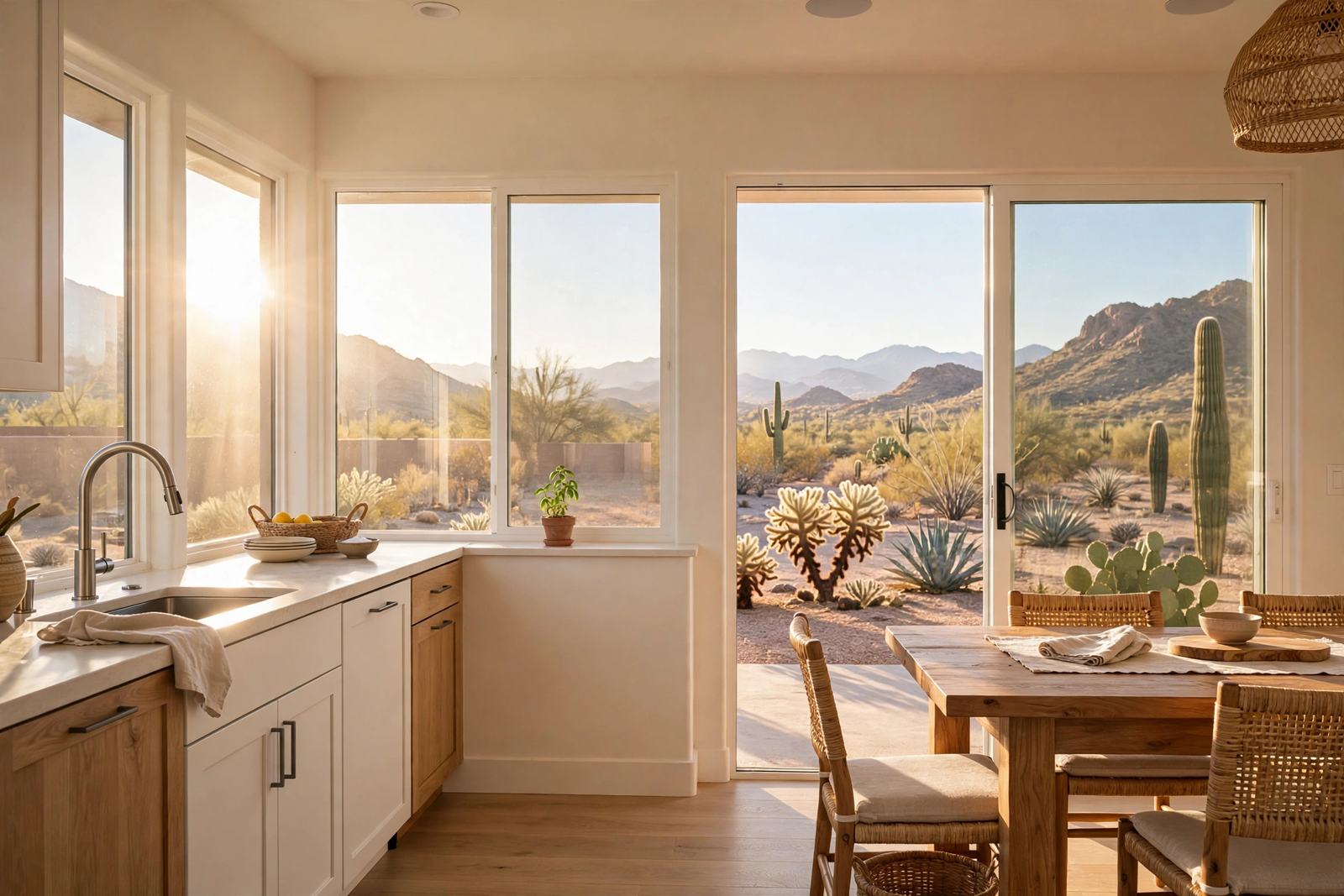
Low-E (low-emissivity) glass has a microscopically thin, transparent metallic coating sealed inside the window that reflects radiant heat while letting natural daylight pass through. Unlike window tint, which darkens your rooms and absorbs heat into the glass, Low-E glass bounces desert heat back outside before it can warm up your living space.
What we look for
- What Low-E Glass Actually Is: Low-E stands for low emissivity. In building science, emissivity is simply a measure of how easily a surface absorbs and radiates heat.
- How It Works: The Thermos Effect: The easiest way to picture how Low-E glass works is to think about a stainless-steel thermos or a reflective sunshade in your car windshield, except you can see right through it.
- How Low-E Glass Differs from Tint and Window Film: Homeowners often ask if putting dark tint or aftermarket solar film on their existing windows does the same thing as Low-E glass.
- Why It Matters More in the Desert Than Almost Anywhere Else: In milder parts of the country, windows mainly contend with air temperature.
- Four Questions to Ask When Comparing Window Quotes: Not all Low-E glass is created equal.
- 1. The Glass Package and Low-E Coating: In the Sonoran desert, clear glass is an open door for heat.
- 2. The Frame Material: The glass is only part of the window.
- 3. The Installation Method: How a window is put into the wall changes both the labor cost and the long-term result.
- 4. Whole-Home Scope vs. Piecemeal Swaps: The number of windows being replaced changes the total, but it also changes how the house performs.
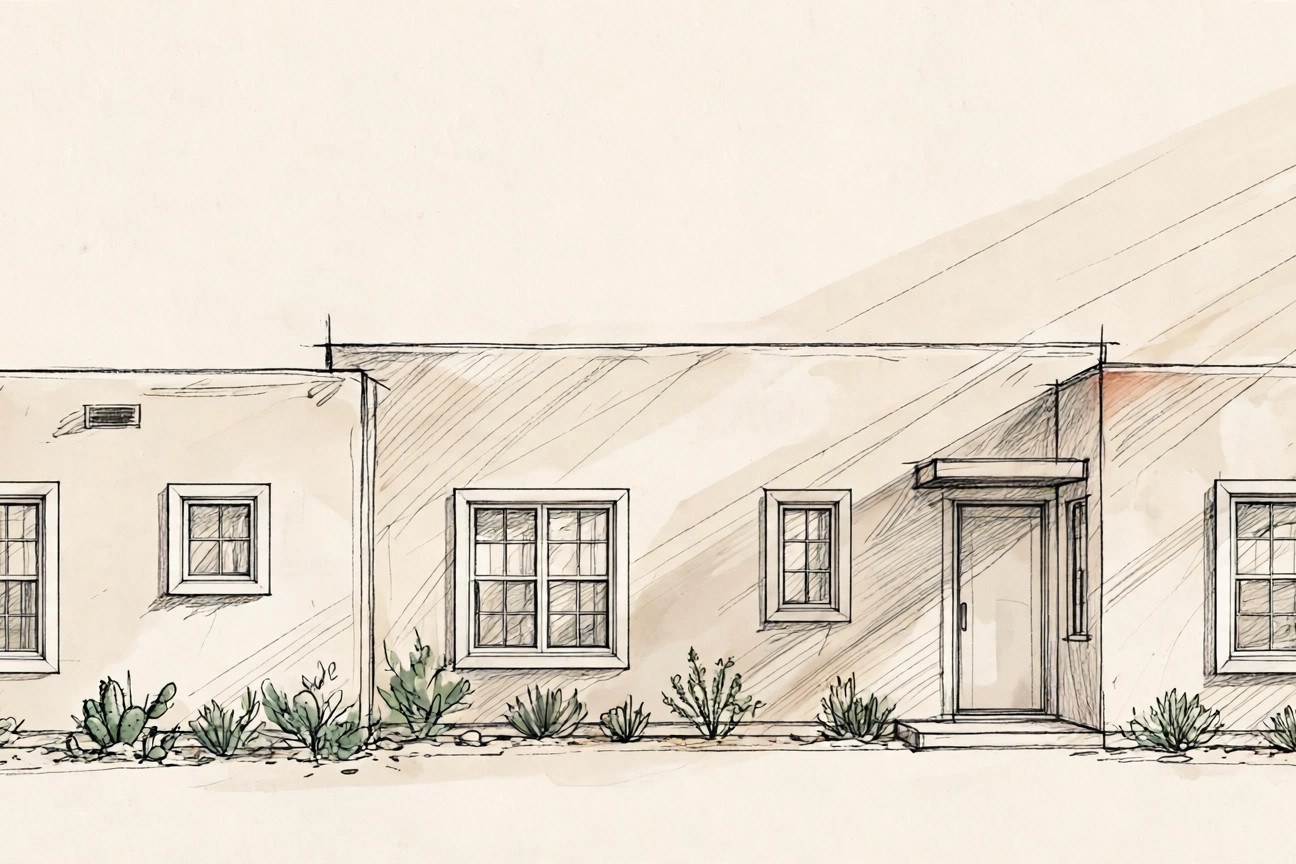
See What Your Home Is Telling You
Book a complimentary assessment and look at your home's condition together, in plain language, before you decide anything.
Book Your Complimentary Assessmentor call or text (520) 415-2983