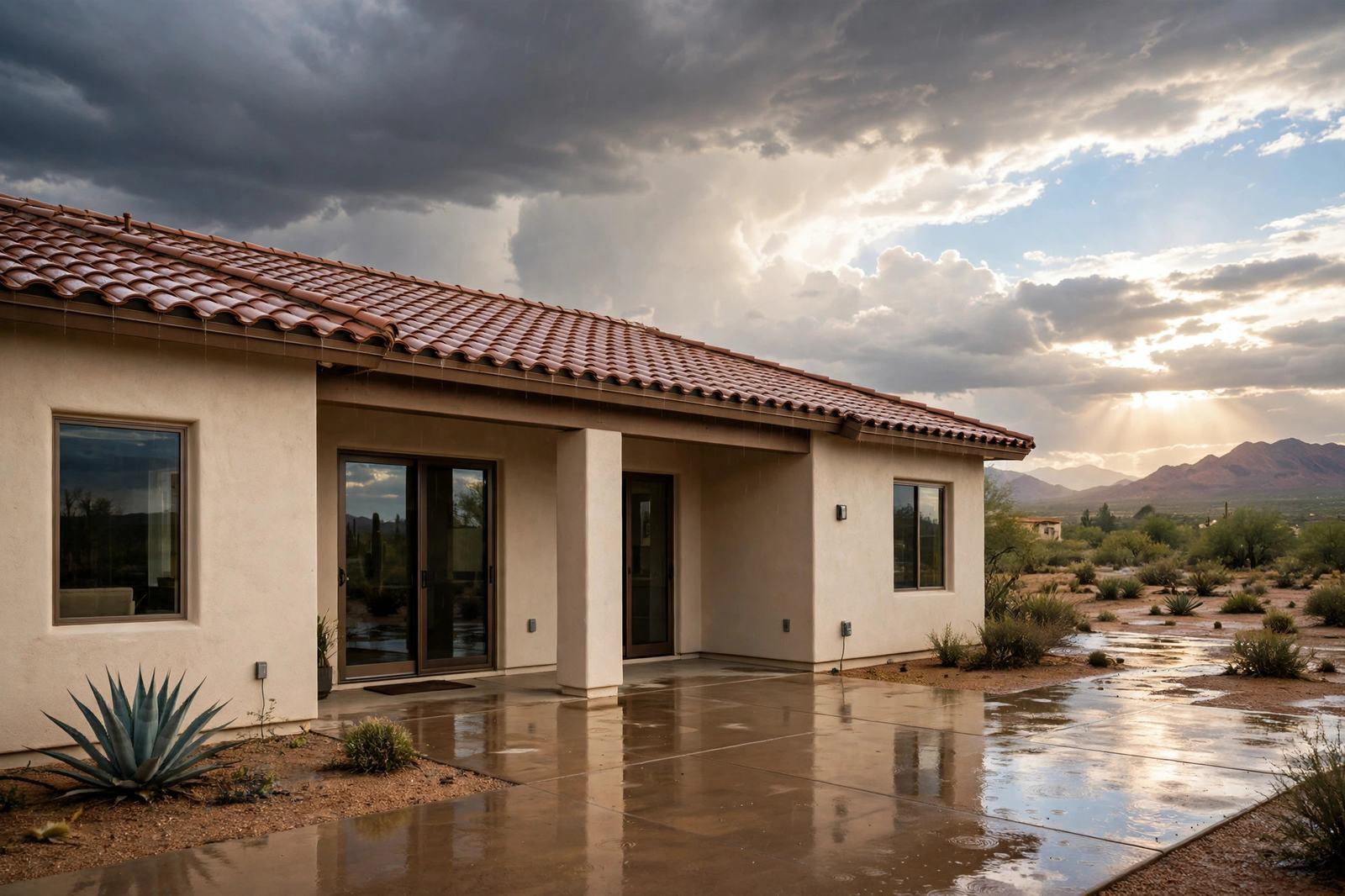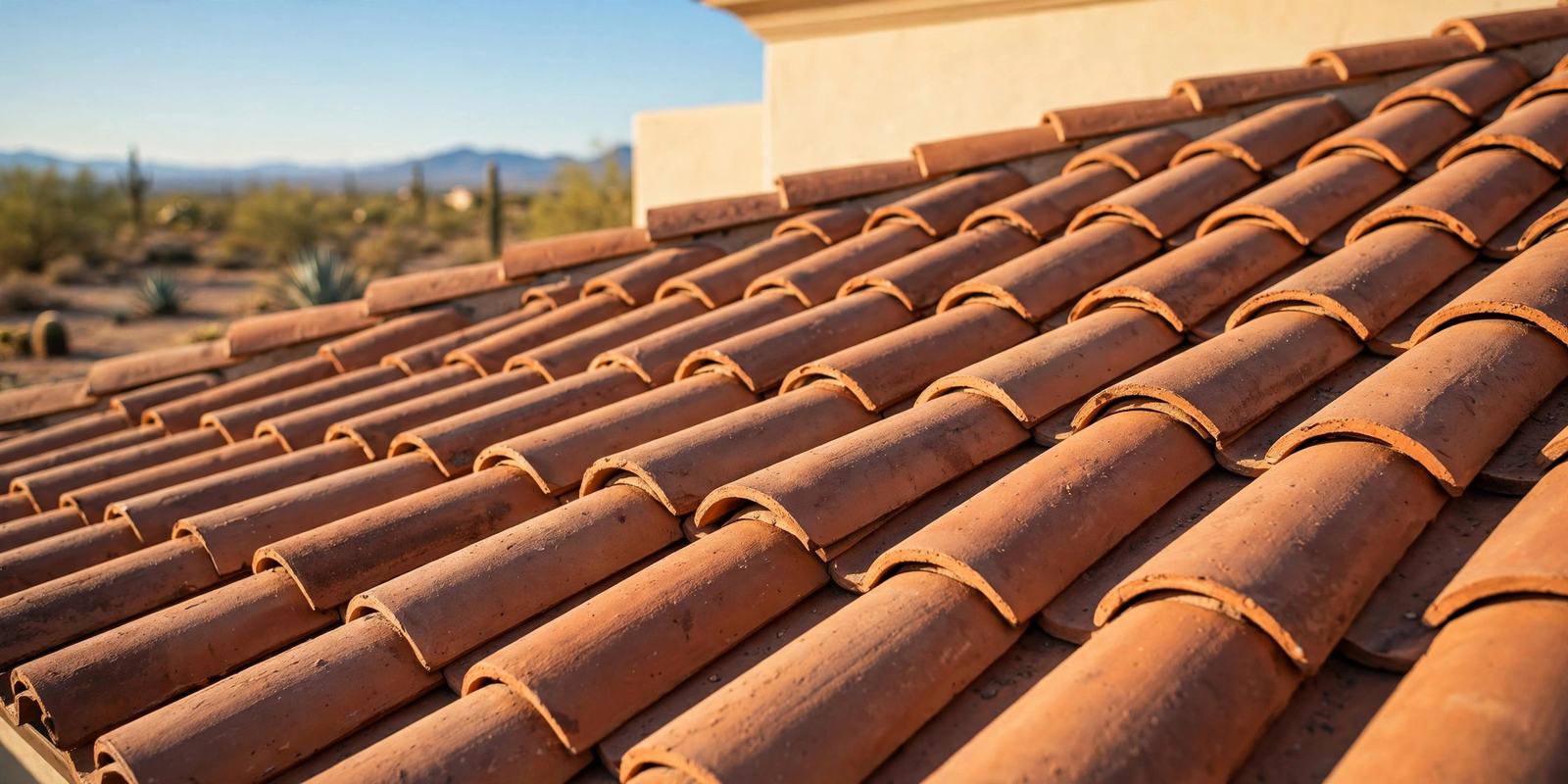
If you stand in your driveway in Tucson, Oro Valley, or Green Valley and look up at your tile roof, it probably looks great. Aside from the occasional chipped corner, concrete and clay tiles can sit in the desert sun for forty or fifty years and barely change appearance.
That is why it catches so many homeowners off guard when a brown water stain suddenly shows up on the bedroom ceiling after a monsoon storm. How can a roof leak when every single tile looks intact from the street?
The short answer is that the tiles are not what keep the rain out of your house. The underlayment beneath them does, and on almost every tile roof in Southern Arizona, that hidden layer wears out first.
How a Tile Roof Actually Works
A tile roof is built as a two-part system, and each layer has a completely different job.
The heavy clay or concrete tiles on top act as a protective armor. They break the force of heavy summer downpours, shed most of the water toward the eaves, and shade the roof deck from direct ultraviolet rays. However, tile is not a sealed waterproof barrier. Tiles overlap rather than lock airtight, which means wind-driven rain regularly blows past the overlaps and runs underneath the tiles.
That water lands on the underlayment, a heavy felt or synthetic waterproof membrane rolled directly over your wood roof decking. The underlayment channels that water safely down the slope and off the roof. Along the roof valleys, chimneys, vents, and wall transitions, metal flashings work alongside the underlayment to guide heavy water flow away from vulnerable seams.
Why Desert Heat Breaks Down Underlayment While Tiles Look Fine
Concrete and clay tiles handle heat effortlessly, but the waterproof membrane trapped underneath them lives in an oven.
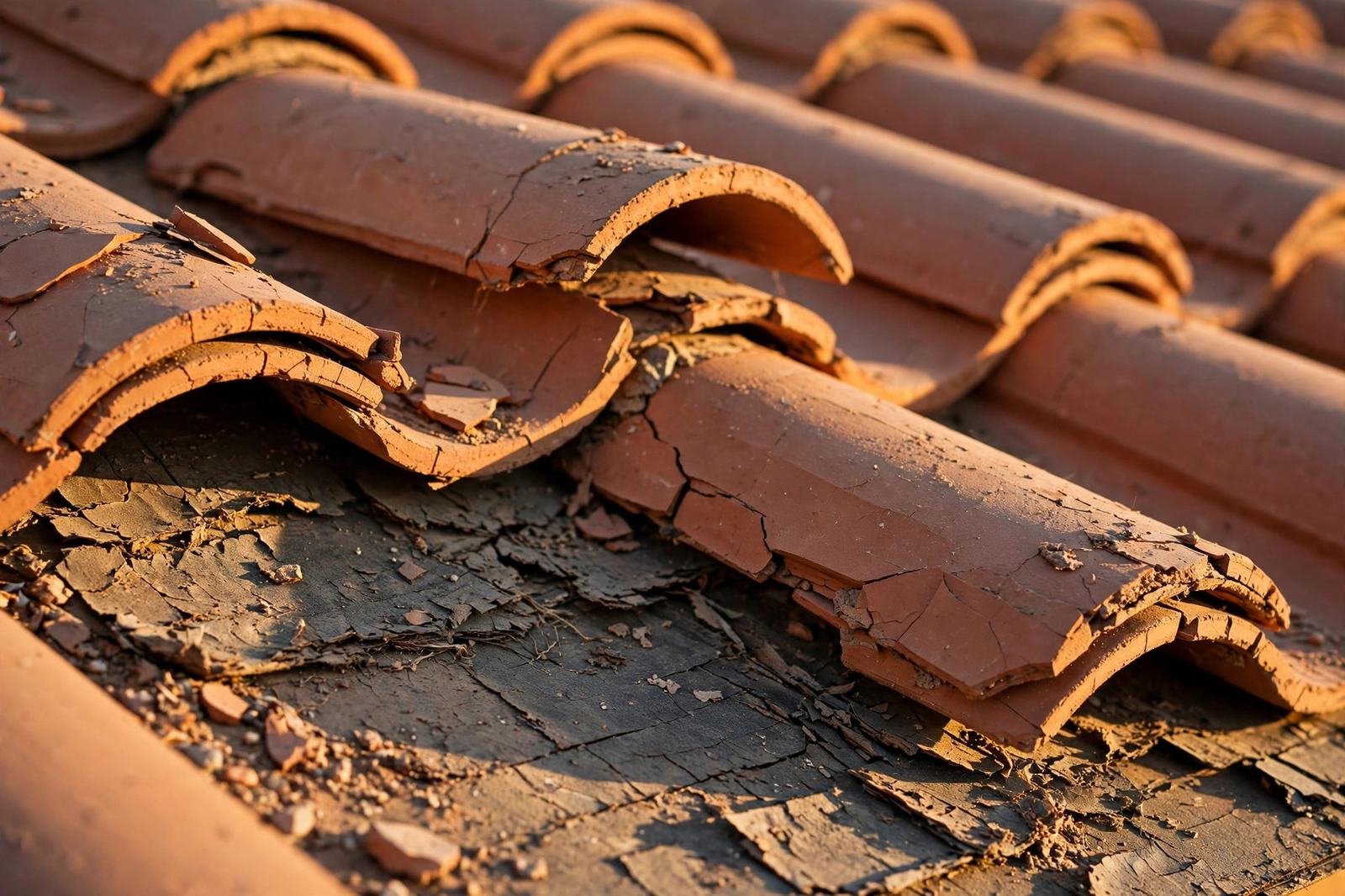
Throughout a Southern Arizona summer, temperatures directly beneath dark roof tiles climb well past the air temperature outside. Year after year of baking in extreme heat cooks the oils and flexibility right out of traditional felt underlayment. As it dries out, the membrane shrinks, turns brittle like an old newspaper, and develops cracks around nails, seams, and valleys.
If a single tile slips out of place or cracks from foot traffic, direct sunlight hits that exposed patch of underlayment and speeds up the breakdown even faster. Because all of this happens beneath a row of solid tiles, your roof looks normal from the ground the entire time the waterproof barrier is failing.
Warning Signs That Your Underlayment Is Aging
You do not need to climb a ladder yourself to spot the early clues that your roof's underlayment is reaching the end of its life. Most of the signs show up either inside the house or right at the roof edges:
- Ceiling stains or bubbling paint after a heavy or wind-driven rain, even when no broken tiles are visible above that room.
- A damp or musty smell in a closet, hallway, or attic space following a storm.
- Granules, dried black felt pieces, or debris washing out of your roof valleys or collecting on the ground below the eaves.
- Slipped, raised, or uneven tiles that indicate fasteners or wood strips underneath are shifting.
- Cool surface-temperature patterns on a thermal scan across an interior ceiling, where moisture trapped above the drywall is cooling the surface before a visible stain breaks through.
Why "The Tiles Look Good" Does Not Mean the Roof Is Healthy
When underlayment begins failing across an older roof, patching one leak spot is usually a temporary band-aid. Because the rest of the membrane baked in the exact same sun for the exact same number of summers, another leak often shows up a few feet away during the next big rain.
The good news is that when your tiles are still in solid shape, you often do not have to pay for brand-new tile across the whole house. A qualified roofer can evaluate whether your roof is a candidate for lifting the existing tiles, replacing the worn-out underlayment and flashings over clean wood decking, and relaying your sound tiles back in place, or whether a full replacement makes more sense.