If you have ever requested a window quote or browsed a home improvement aisle in Tucson, you have heard the term Low-E glass tossed around as if it explains itself. Salespeople often mention it in passing, check a box on a brochure, and move right along.
In Southern Arizona, however, Low-E glass is not just a minor upgrade or a marketing buzzword. It is the primary technology that determines whether a window acts like a heat shield or an open oven door during our long summer afternoons. Understanding how it actually works makes it much easier to compare window options with confidence.
What Low-E Glass Actually Is
Low-E stands for low emissivity. In building science, emissivity is simply a measure of how easily a surface absorbs and radiates heat.
Standard, uncoated clear glass has very high emissivity. When the afternoon sun hits an older clear glass window in Tucson or Marana, the glass soaks up that solar energy and radiates the heat straight into your living room.
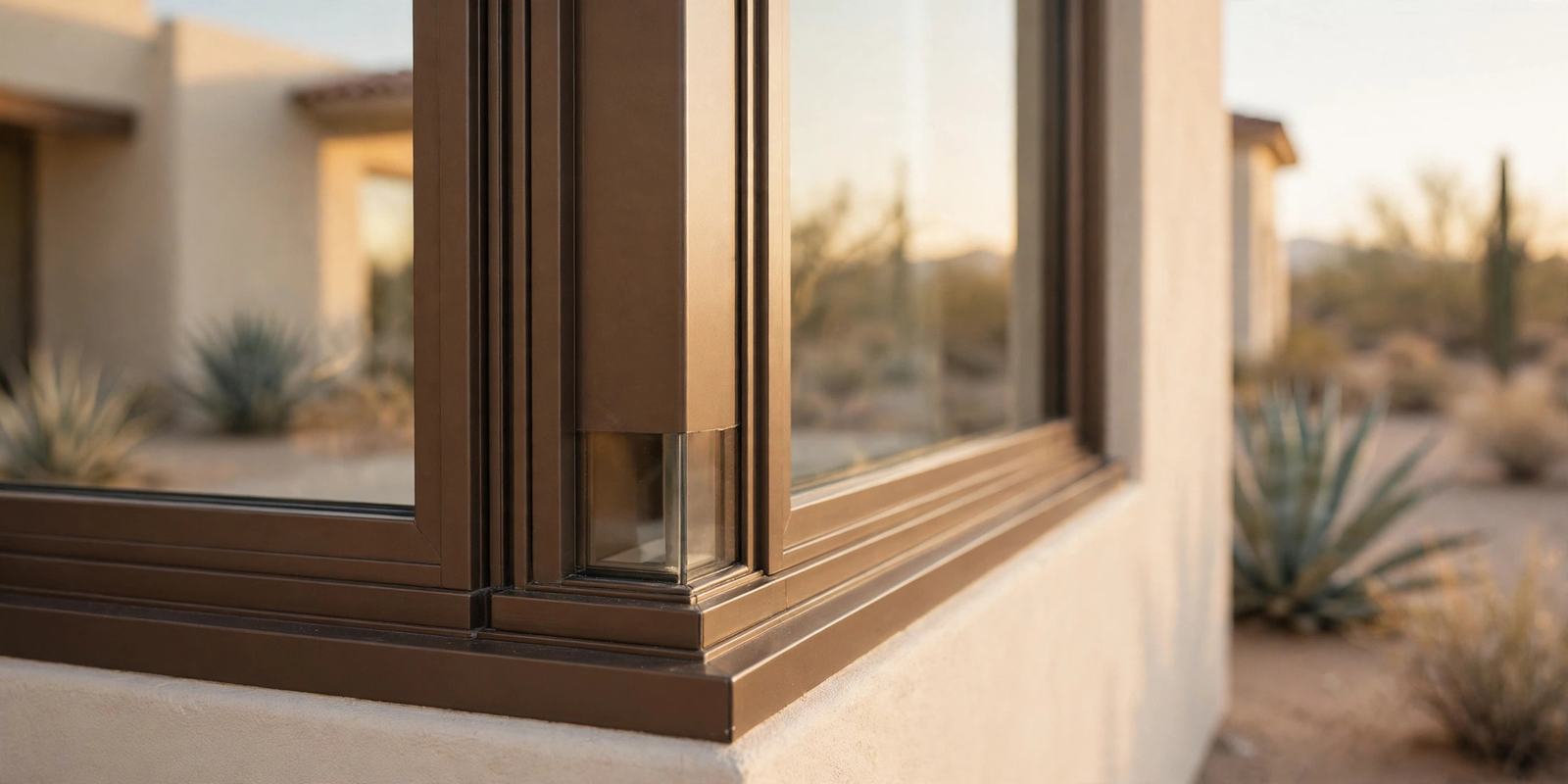
To stop that from happening, manufacturers apply a microscopically thin metallic or metal-oxide layer directly onto the glass surface. This coating is thinner than a human hair and is completely transparent to the eye. In a modern double-pane or triple-pane window, the Low-E coating is sealed inside the airspace between the panes of glass, where dust, cleaning sprays, and Arizona monsoons can never scratch or wear it away.
How It Works: The Thermos Effect
The easiest way to picture how Low-E glass works is to think about a stainless-steel thermos or a reflective sunshade in your car windshield, except you can see right through it.
Sunlight is made up of three main types of energy: ultraviolet light (which fades carpets and furniture), visible light (which brightens your rooms), and infrared energy (which you feel as heat).
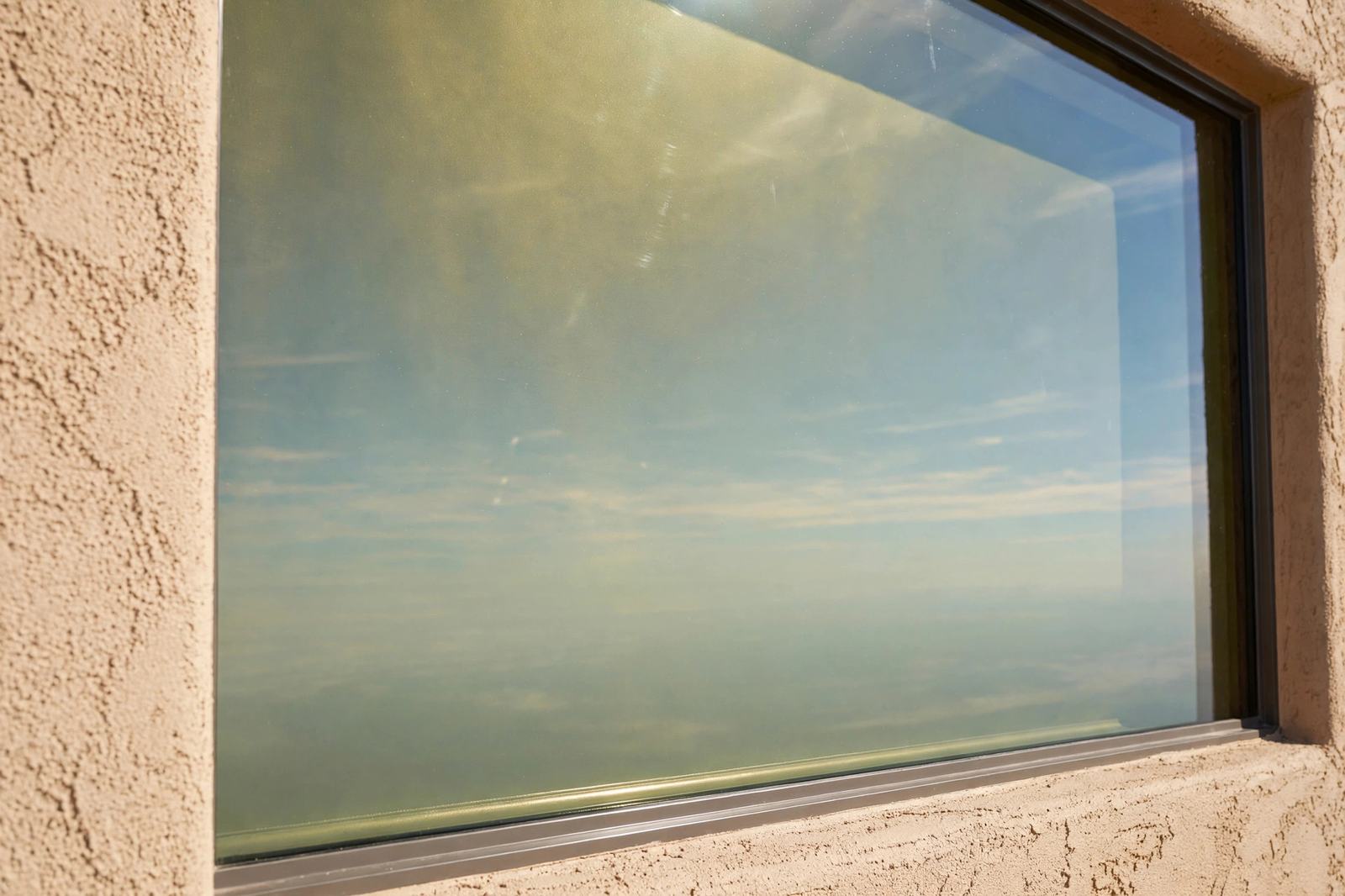
A quality Low-E coating acts like a selective filter. It allows visible daylight to pass into your home so your rooms stay bright and open, while reflecting the long-wave infrared heat back toward whatever side it came from. On a blazing July afternoon, it reflects outdoor radiant heat back outside. On a chilly January night when your heater is running, it reflects your indoor warmth back into the room instead of letting it bleed out into the desert night.
How Low-E Glass Differs from Tint and Window Film
Homeowners often ask if putting dark tint or aftermarket solar film on their existing windows does the same thing as Low-E glass. While both try to tame the sun, they work through completely different physics.
- Tinted glass and window films work by absorption. They darken the glass to block light and soak up solar heat. Because the glass itself absorbs that heat, the window pane gets hot to the touch and eventually radiates a portion of that heat inward anyway. Tints also dim your natural light, making rooms feel cave-like even at midday.
- Low-E glass works by reflection. Instead of absorbing heat and darkening your view, a factory-applied soft-coat Low-E layer reflects infrared heat away from the glass while keeping the window clear. And unlike aftermarket peel-and-stick films, which can bubble, purple, or peel under intense Arizona UV exposure, a sealed Low-E coating lasts as long as the insulated glass unit itself.
Why It Matters More in the Desert Than Almost Anywhere Else
In milder parts of the country, windows mainly contend with air temperature. In Tucson, Oro Valley, Vail, and Green Valley, our homes face relentless radiant heat from every angle.
Direct sunlight hammers south- and west-facing glass for hours every afternoon. Even windows that sit under a shaded patio roof get bombarded by radiant heat bouncing off hot stucco walls, brick pavers, concrete driveways, and desert landscaping rock. Without an effective Low-E coating, that radiant heat passes straight through the glass regardless of how cold your air conditioner is blowing.
Four Questions to Ask When Comparing Window Quotes
Not all Low-E glass is created equal. Some coatings are designed for cold northern climates where homeowners actually want solar heat to pass through the glass in winter, which is the exact opposite of what a Southern Arizona home needs. Before you choose a window, ask these four questions:
- What is the Solar Heat Gain Coefficient (SHGC) of the complete window? The SHGC rating, printed on the National Fenestration Rating Council (NFRC) label, measures how much solar heat gets through the entire window unit on a scale from 0 to 1. In Arizona, a lower SHGC number means better protection against summer heat.
- Is the Low-E coating soft-coat or hard-coat? Soft-coat (sputtered) Low-E coatings applied in a vacuum chamber offer much stronger solar heat control for hot climates than older hard-coat (pyrolytic) coatings.
- How many layers of silver are in the Low-E coating? High-performance desert windows often use double-silver or triple-silver soft-coat Low-E layers to block more infrared heat without sacrificing daylight.
- How is the rest of the window built? Low-E glass is only one part of the system. Ask about the frame material, the insulating gas sealed between the panes, and the perimeter seals, because a great piece of glass inside a heat-conducting aluminum frame or a failing seal will still leave the room uncomfortable.