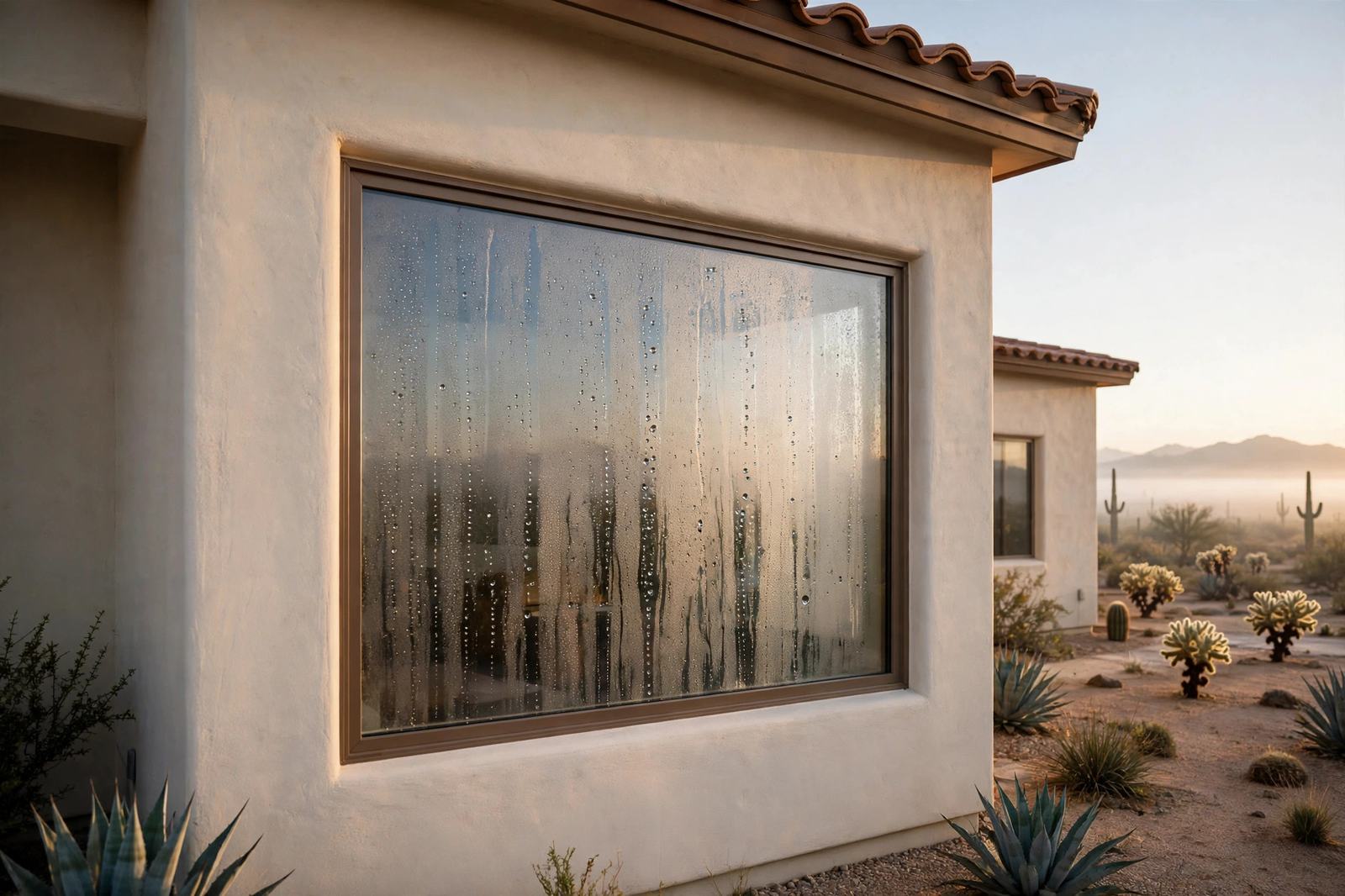
Pull back the curtains on a cold desert morning and your windows are fogged or wet. After a mild, sunny day, Tucson nights drop fast into the forties or thirties during the cooler months, and that swing can put a surprising amount of water on the glass. It is natural to wonder if your windows are going bad.
The answer depends entirely on which side of the glass the water is sitting on. Once you understand the simple physics behind window condensation, you can tell in about ten seconds whether you are looking at a normal household humidity issue or a window that has reached the end of its life.
Why Glass Sweats First
Condensation is the same thing that happens to a cold glass of iced tea on a warm patio. Air always holds some amount of invisible water vapor. Warm air can hold a lot of moisture, while cold air can hold very little. When warm, moist indoor air touches a cold surface, the air cools down right at the surface and drops its extra moisture as liquid water.
Because glass is much thinner than your insulated drywall, your windows are almost always the coldest surface in the room on a chilly desert morning. That is why moisture shows up on the glass first.
Kind #1: Moisture on the Room-Side Surface of the Glass
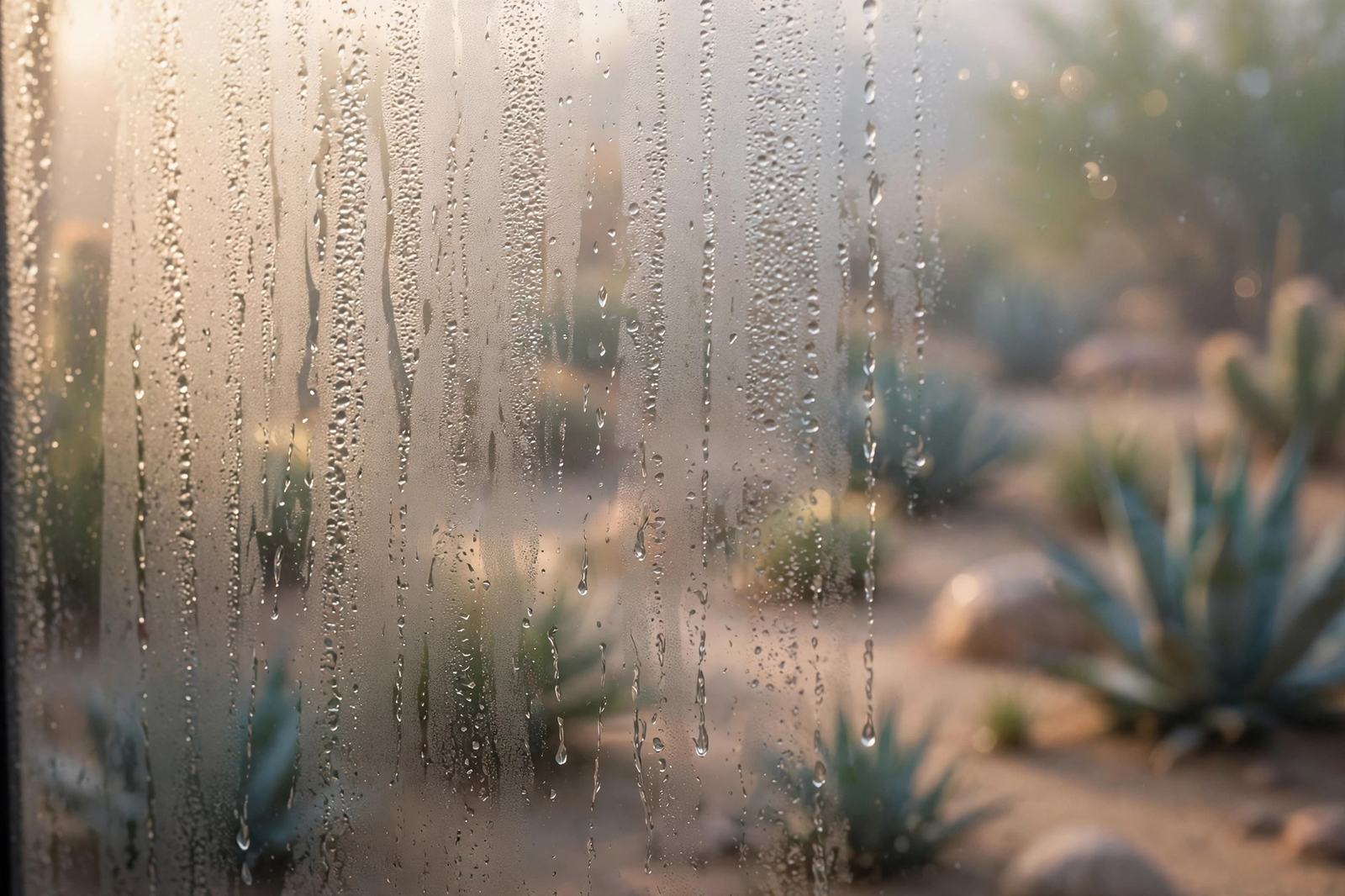
If you can run your finger across the inside of the window and wipe the water right off, you are looking at room-side condensation. This is everyday indoor humidity condensing on a cool pane of glass, and it points to the air inside your home more than to a broken window.
In the winter, we keep our houses closed up tight. Everyday activities like taking hot showers, boiling water on the stove, watering houseplants, running a humidifier, and even breathing add moisture to the indoor air. Heavy blinds or curtains closed overnight can also trap air against the cold glass and make morning sweating more noticeable. Running bathroom and kitchen exhaust fans, opening blinds partway so room air can circulate across the glass, or cracking a window for a few minutes as the morning warms up will usually clear it right up.
Kind #2: Moisture or Fog Between the Panes
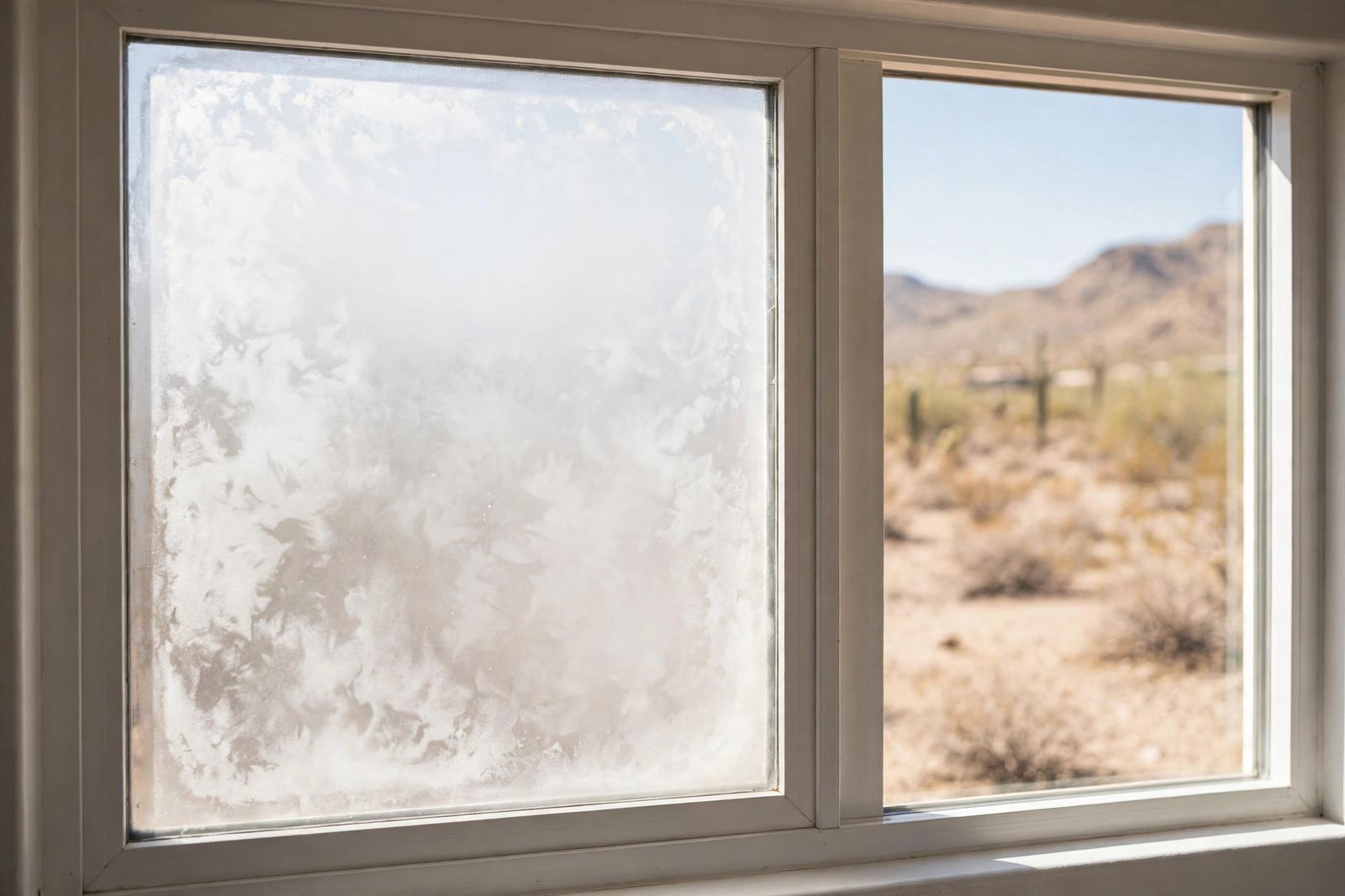
If you wipe the inside of the glass and the outside of the glass, and the cloudy haze or water droplets are still trapped in the middle, you are looking at something completely different.
Modern double-pane windows are built with two sheets of glass separated by a sealed insulating space. When that perimeter seal bakes in the Arizona sun year after year, it eventually cracks and fails. Once the seal opens up, outside air and moisture get pulled into the space between the panes. Because you cannot reach between the glass to wipe it off, that fog or mineral hazing is permanent. It is the window telling you that its insulating seal has failed and it has reached the end of its service life.
A Simple Morning Check You Can Do Tomorrow
Tomorrow morning, before the sun warms up the house, walk through your rooms and do a quick four-step check:
- Touch the glass with your finger or a dry paper towel to see if the moisture wipes off on the room side.
- Step outside and check whether the moisture is simply morning dew on the exterior glass.
- Note which rooms have the most condensation, such as bathrooms, kitchens, or bedrooms.
- Watch whether the glass clears on its own by mid-morning, or if a cloudy film stays trapped between the panes all afternoon.